Amanda Jefferson built an interactive day planner with Claude Cowork by describing how she wanted it to work, testing the result and refining it. She launched it to an existing email list, then used customer feedback to improve it. The product started with a problem she understood from her own life.
In our conversation, we discussed a launch that brought in a reported $1,700 in 18 hours. Amanda estimated sales reached about $10,000 in the first week. Those are her reported results, not independently verified accounts; the interview doesn't specify the currency or establish profit.
The useful part is what happened around those numbers. The years of knowing her customers. The product she actually wanted to use. And the support work that came with selling software.
How Amanda came up with a digital product to sell
Amanda is the founder of Indigo Organizing. She spent six or seven years organising people's homes before moving into helping them use their technology. In the interview, she describes teaching clients where their files live, how their email works and what to do when their computer feels overwhelming.
That work gave her something useful to build from: a close understanding of the people she was helping.
She also wanted a planning tool she could shape around her own preferences. She had tried Notion, Asana and other tools, but kept wanting them to behave differently. So she started building a planner for herself in Claude Cowork.
If you are still working out how Claude fits into your business, start with the beginner guide to using Claude for business. Amanda's story makes more sense once you can picture using it for a task you already understand.
How she used Claude to build the day planner
Amanda remembers starting with roughly a paragraph describing what she wanted the tool to do. She doesn't have the original prompt to share, so I'm not going to pretend there's a magic sentence you can copy from this interview.
What she describes is outcome-based prompting: tell Claude what you want to build, how you want it to behave and why those details matter. Then try the result and keep refining it.
Amanda wanted confetti when she completed a task. Then she wanted a pep talk. Then she decided the pep talk should come from an avocado. Obviously.
Those choices made it feel like something she would enjoy opening. For someone selling a planning tool, whether people want to come back and use it is a pretty important design question.
The launch had an audience behind it
Amanda already knew how to launch digital products. She had experience with sales pages and the systems needed to deliver them. She launched the planner as a beta after testing it herself, and she says there were still glitches to fix.
She sent the launch email at about 10 pm on a Monday. That detail made me laugh because I know the feeling of having something ready and wanting to get it out into the world immediately.
But 10 pm on a Monday is not the strategy. Amanda had an email list of about 4,000 people. She also had almost 175,000 Instagram followers at the time of the interview, and said her email list tended to convert better.
She was introducing a relevant product to people who already knew her work. The result wasn't simply “type a prompt, collect money”.
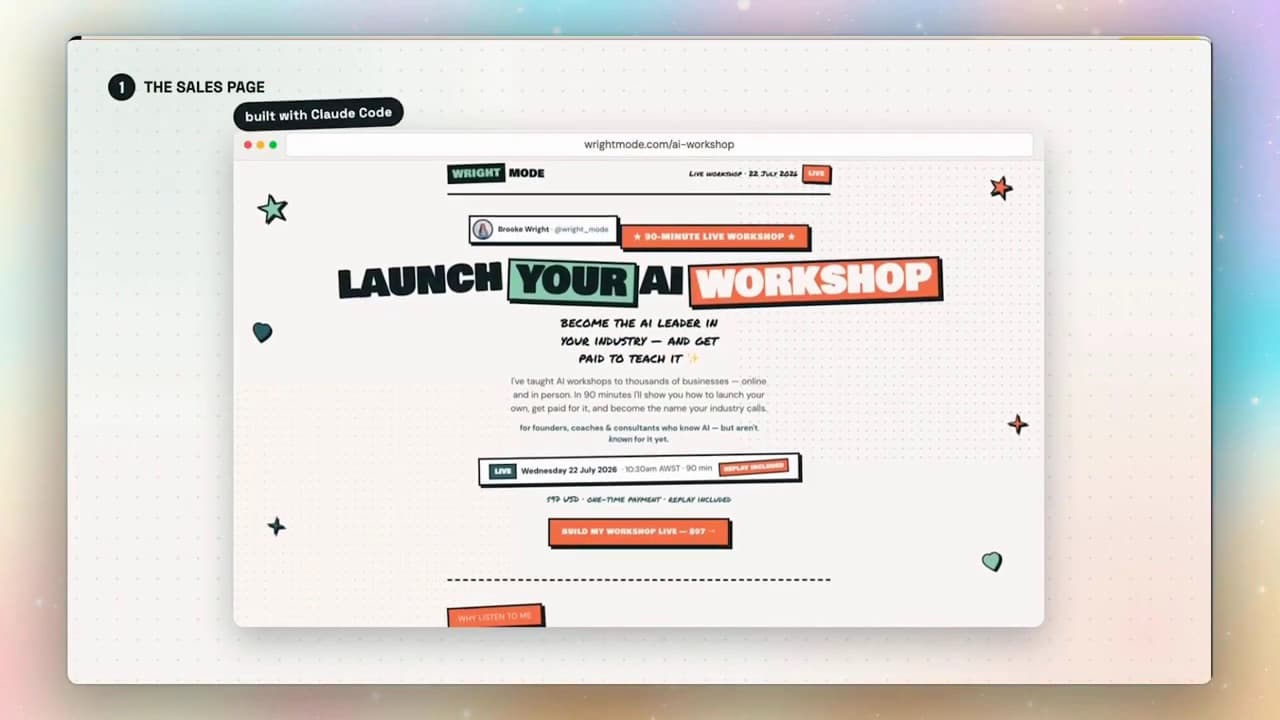
The sales page is part of that path too. My Claude Code sales-page walkthrough shows a separate build if you need to work on how you explain and present your own offer.
Buyers helped shape the next version
Amanda put a feature-request form inside the planner. Customers asked for things such as their own categories and more colour options. She says their suggestions changed the product substantially from its first version.
That gave her a direct way to learn what people wanted while they were using it. Some people also sent messages simply telling her what they loved.
Feedback needed boundaries, though. By the time we spoke, Amanda was working out which requests to build and which to leave. Every suggestion couldn't become another job she had to finish.
Selling software includes looking after it
At the time of recording, Amanda described the planner as a $37 one-time purchase. That's a historical detail from the interview; check Amanda's current planner page for the offer available now.
She was also discovering what ongoing support looked like. Customers had access issues. There were updates. People were putting parts of their daily lives into the tool, and she felt responsible for keeping it working.
With the planner, I'm not really done.
That is Amanda at 18:48 in the interview, and it matters as much as the launch result.
Before selling a tool, decide how customers will report problems, what you will maintain and how much support the price can realistically cover. Building the first version is one part of the work.
What happened with her other digital products?
Amanda went on to build Subscription Cleanse, which helps people work through their recurring purchases, and the Easy Content Planner, which came from wanting a different way to organise her content ideas.
She also created Tech 21, a series of short technology lessons delivered by email. In our conversation, she explains that people wanted specific, achievable wins they could try immediately. That shaped how she packaged the teaching.
There is a separate sales story in this interview that is easy to muddle with the planner. Amanda describes an earlier period of Instagram growth and approximately $30,000 in sales over 10 days from a digital product she already had. That figure belongs to the earlier digital-product story, not the Claude planner launch.
Her point was that having a useful product ready gave new followers a next step. She had been developing the business before that burst of attention arrived.
What can you take from Amanda's story?
Start with something you know well enough to judge. Describe the outcome you want, build a small version and use it yourself. Let a few people try it, watch where they get stuck, and work out what you can support before promising more.
Amanda brought years of customer experience and an established audience to this. Your first useful build might be a tool for your own business, or a prototype to test with a client.
For another example grounded in industry experience, read how Sally built AI apps for dance-studio marketing.
FAQ
Can you sell digital products you build with Claude?
Amanda's interview is an example of someone who did: she built and sold an interactive day planner using Claude Cowork. Building a tool still leaves work to do around testing, delivery, customer support and finding people who want it. Her sales are not a prediction of what another product will earn.
Do you need a large audience before making a product?
You need a way to reach and learn from potential buyers. Amanda already had customers, an email list and an Instagram audience; that context belongs alongside her launch figures. A smaller test with people who have the problem can help you learn before building a larger launch.
Is an AI-built digital product passive income?
A software product can require continuing support and maintenance after the sale. Amanda describes access issues, feature requests and responsibility for a planner customers were relying on. Include that work in your decision about what to build and how to price it.
Was Amanda part of Wright Mode?
Yes. In the public interview, we discuss Amanda sharing the planner in the Wright Mode community and demonstrating it at Member Show and Tell. Her experience also includes years of running her own business and learning about digital products elsewhere.
Amanda brought a real problem into the room and built something she wanted to use. Bring your own business task to Wright Mode membership, and build it with support from the community.