Two years ago I charged $280 for a 90-minute call. It came with a pile of extras I'd promised in the moment, it was a lot of work, and it was not profitable.
The same call is now $3,000. The extras still happen — I just don't do them anymore. Claude does.
This is Part 2 of "how I make money with Claude". Part 1 covered the four income streams and the order they go in. This one is the actual work: one real AI consulting call, before, during and after, and how much of it Claude now handles.
What an AI consulting call is actually for
An AI consulting call is a paid 90 minutes where you diagnose the real constraint in someone's business and tell them what to do about it. It is not tech help. It is not free implementation at minute 60.
The line I use on every call: the consult is my brain in their business. Clients arrive thinking they need a tool. They usually need a decision. The tool comes after.
Most people who want to "sell AI to businesses" skip this and go straight to building automations for companies they've never worked inside. That's the lane I steer people out of. The money is in the call, and the call only works if the before and after are handled.
Before the call: Claude writes the brief
Every consult starts with an intake form. Someone books and pays on my site, the form lands in their inbox, and their answers land in mine. It asks what the business does, who's in it, the biggest bottleneck right now, what they've already tried, and the question that does the most work: if this call goes well, what does that look like for you?
That last one matters because the client is telling you exactly what they want before you've spoken.
Then Claude does the reading. I ask it to take the form, their website, their socials and any emails between us, and write me a one-page brief: a snapshot of the business, what they asked for versus what's actually costing them, and the priorities for the call. If your meeting recorder is connected (I use Fathom), it reads past call transcripts too. You can set it as a scheduled task so it checks your inbox a couple of times a day.
In the video, the example client asked for a website chatbot because she was getting 20 to 30 enquiries a week. Her own bottleneck answer was proposals at half a day each. The brief called it in one line:
The chatbot saves her inbox time. The proposal speed saves her revenue.
That's the whole diagnostic. Are they constrained on leads, or on what happens after the lead? She wasn't short on leads. She was short on the capacity to quote them.
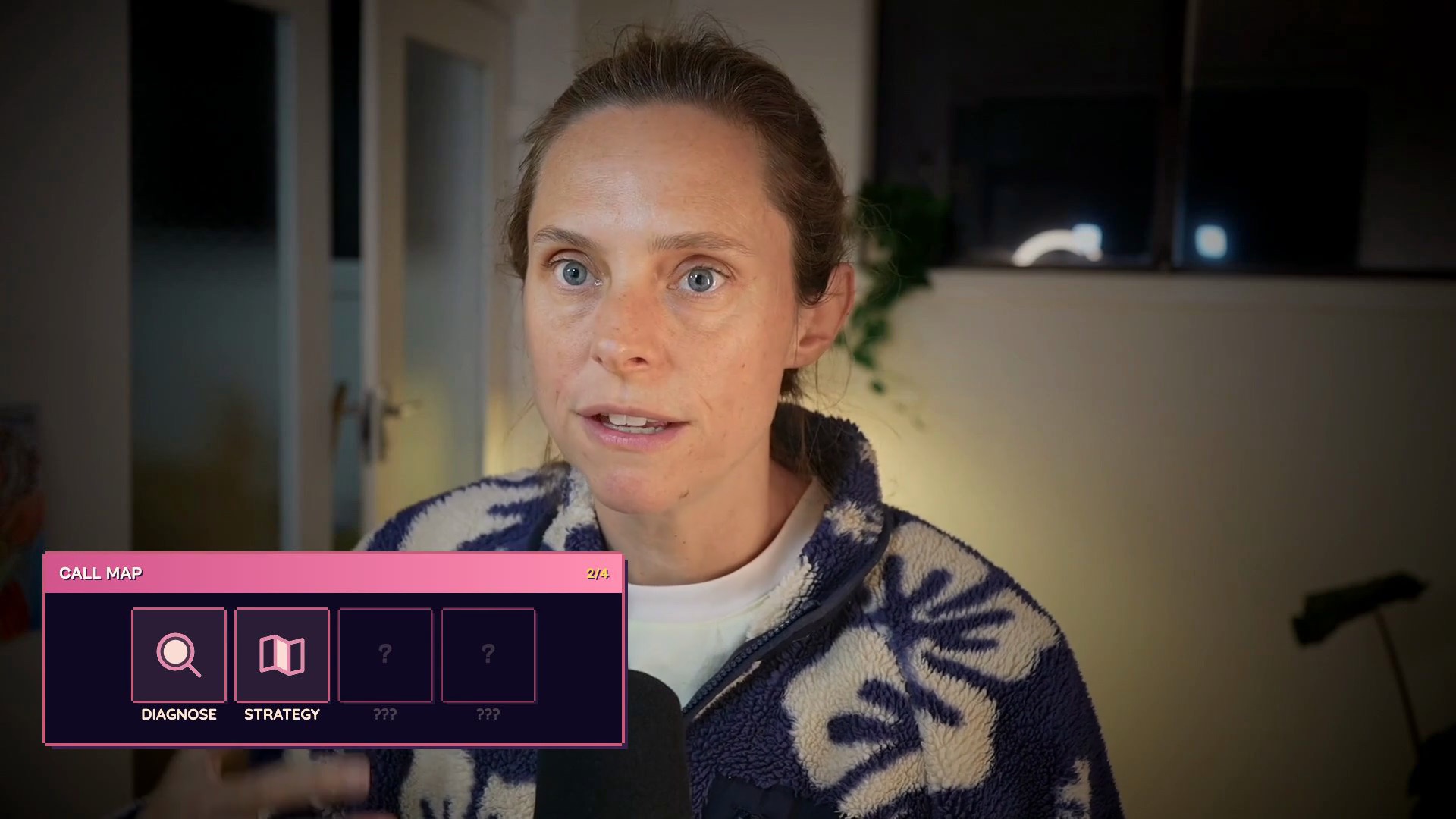
The 90 minutes: four blocks, no improvising
0 to 15 is diagnosis. I read their form back to them, acknowledge what they've already tried (they usually have, and it usually didn't work) and ask the questions the brief flagged.
15 to 45 is strategy. Offers, ops, assets. Strategy first, tools later, every time. Half of this block is telling people which AI tools not to worry about. For the example client, that's where I'd say a chatbot won't fix anything, and we need a way to keep leads warm and get proposals out faster.
45 to 75 is the build, and it's the block that changed my pricing. If the client wants done-with-you, we open Claude together and make the first real thing. In the video that's a proposal-writer skill: her offers, her pricing, her brand kit, fed by the transcript of her discovery call. Half a day per proposal becomes half an hour, because she now has a junior staff assistant that writes the first draft and she reviews it.
I tell every client the same thing here. It's 80% of the way there on the call. Keep giving it feedback like you would a junior and it keeps getting better.
75 to 90 is the plan. What are you doing next week, what does next month look like, and then out to 90 days.
If someone doesn't want done-with-you, the shape changes to possibilities and recommendations, and any implementation gets scoped and quoted separately. People don't pay $3,000 for advice. They pay $3,000 to leave with the thing, or with a plan for the thing.
One rule that makes all of this work: record every call. Step three runs off the transcript, and you should be listening, not taking notes.
After the call: the page Claude builds
This is the part I'd never shown anyone.
Fathom records and transcribes the call. I hand the transcript to Claude Code with my resource-pack skill and it builds the client a private web page: the overview, what we covered, the key takeaways, their current stack with keep-or-change recommendations, priority moves ranked high to low, tool setup guides, the automation templates from my library that apply to them, custom prompts, and a this-week, this-month action plan they can tick off. It builds a feedback form to go with it and pushes the lot live.
In the video that took about three minutes.
I still review it. I add the things a transcript never captures, the nuance from the actual conversation, and I make sure it reads like me and not like AI slop. Hours of writing became 20 minutes of reviewing. If you've got a folder of call recordings doing nothing, that's the fix.
The follow-up is where consults usually die. Claude made the follow-up the best part. Over-deliver here and clients come back, either for the implementation or for another call.
The offer above the consult
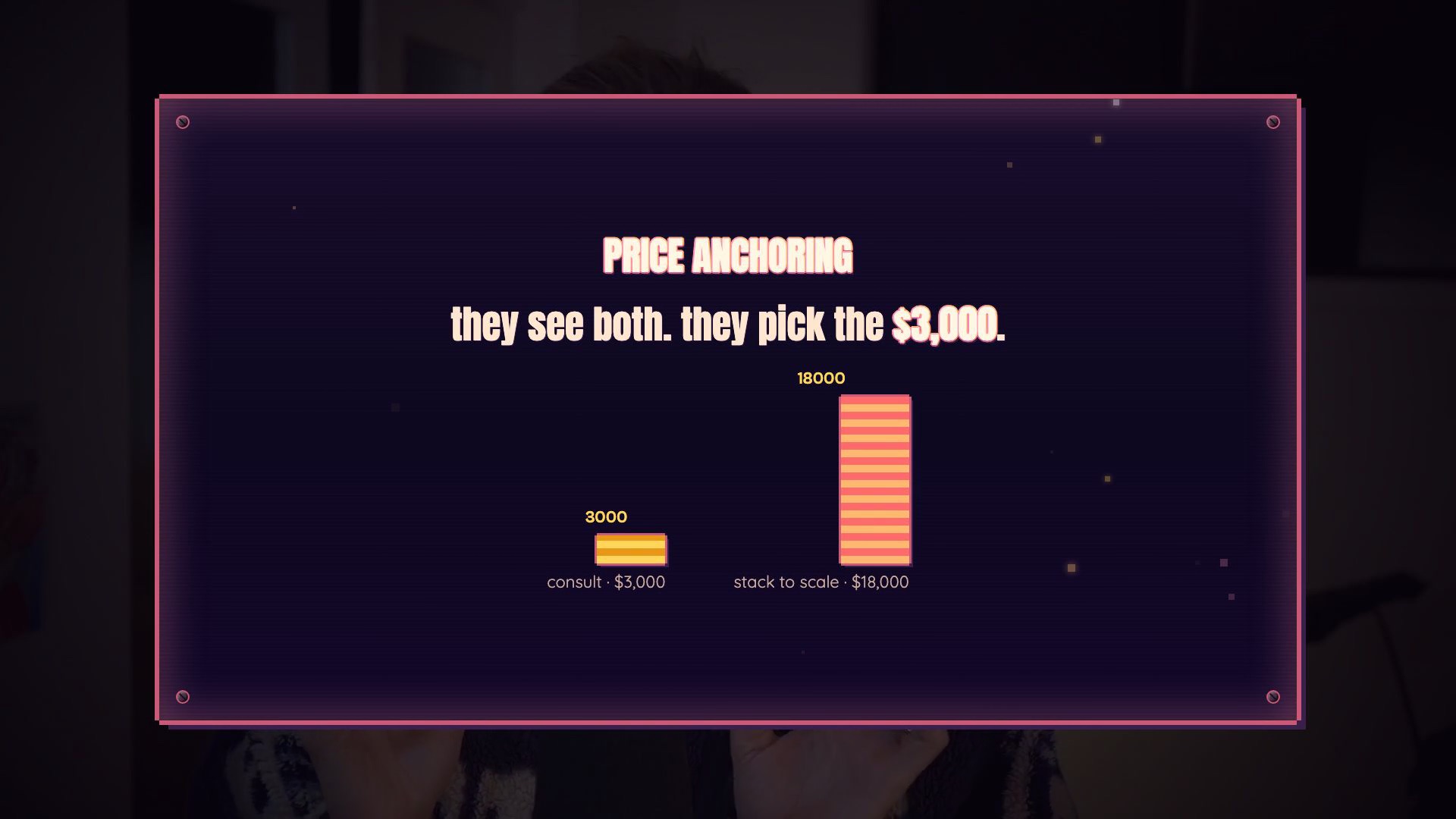
Once you're comfortable with consults, build something above them. Mine is STACK to Scale: I fly in for a few days, we run the consult, set the AI strategy, and then I train the people on the team who will own it. We build the first system together, then they run it. One booking is $18,000.
It exists for two reasons. It anchors the consult (clients see $18,000 next to $3,000 and the $3,000 stops looking expensive), and some clients book it. It came out of consult clients asking to bring their team in.
It's the same system at a bigger scale. Same intake form. Same Claude research before the call. Same proposal written with Claude straight after, in about an hour instead of half a day. You don't need it built in a day. Put one line on your consult page: if you have a team, there's a bigger version, apply here. Then wait.
From $280 to $3,000
The last layer is the one that runs without me. Every consult teaches you something you'll teach again, so I pasted my last five consult transcripts into Claude and asked what I explain more than twice. That became a $47 masterclass with a Claude-built sales page and Stripe for payment. It's made about $60,000 and it doesn't need me in the room.
But the order matters: workshops, then consulting, then the evergreen product. The product is what you grow into once the consults have taught you what to sell.
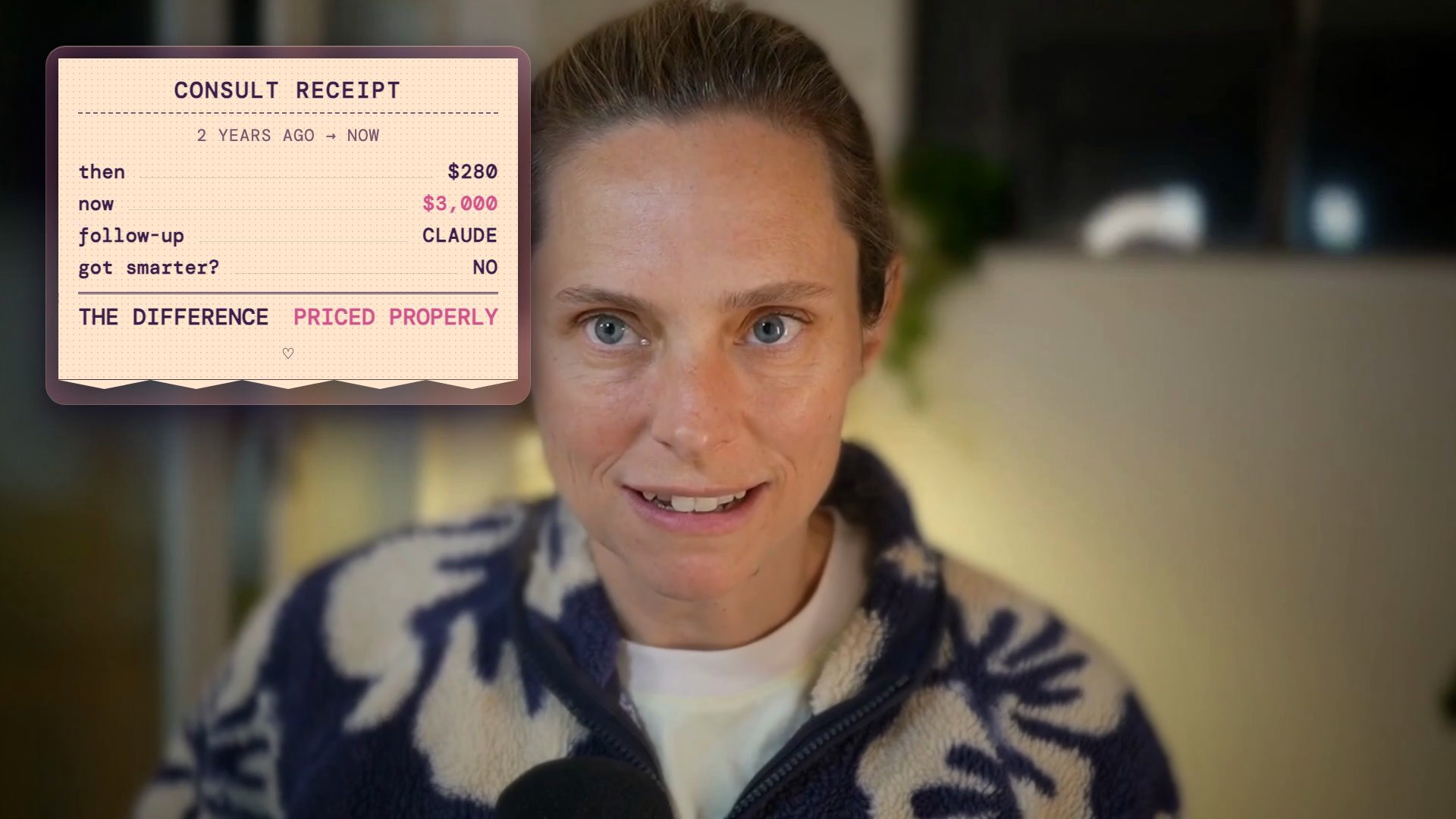
I didn't get smarter between the $280 call and the $3,000 one. I priced it properly and let Claude handle the unpaid parts.
FAQ
How much should you charge for an AI consulting call?
Charge for the outcome the client leaves with, not the 90 minutes. My call is $3,000 AUD plus GST because the client leaves with a diagnosis, a plan and, if they want it, the first system built with them on the call. Two years ago I charged $280 for the same length of call and it wasn't profitable, because the unpaid extras around it ate the fee.
How do you prepare for an AI consulting call?
Have the client fill in an intake form, then have Claude turn the form, their website, their socials and your email thread into a one-page brief. The brief should say what they asked for versus what's actually costing them, so you walk in knowing where the constraint is. Connect your meeting recorder so Claude can read past calls too.
What should an AI consulting call include?
Four blocks: diagnosis (0 to 15 minutes), strategy (15 to 45), build (45 to 75) and plan (75 to 90). Strategy always comes before tools. The build block is done-with-you if the client wants it, or possibilities and recommendations if they don't, with implementation scoped separately.
What do you send a client after a consulting call?
A private resource page built from the call transcript: takeaways, current stack, priority moves, setup guides, relevant automation templates, prompts and a this-week, this-month action plan. Claude Code builds mine in a few minutes from the Fathom transcript, and I spend about 20 minutes reviewing and adding what the transcript missed. If you're starting from zero, here's how the consultancy itself came together.
If you want to build this with support, the consult brief, the resource-pack skill and the proposal system from the video all live inside the Wright Mode membership. Or, if you'd rather have it run on your own business first, book the 90-minute consult.