233 people signed up to a single workshop of mine. My clients pay $3,000 for a 90-minute consulting call.
And I started with 158 followers and a workshop that TWO people showed up to.
Everything in between those two numbers is a system — not luck, not a viral moment, not a big launch. This post is the whole thing, step by step: what to sell, what to charge, how the room fills, and the close that turns a workshop into paying clients without anyone feeling sold to.
How to get clients with AI workshops: the 6-step system
Here's the shape of it before we go deep. Run a workshop every six weeks, and each turn of the loop does three jobs at once — grows your email list, builds your authority, and hands you warm buyers.
- Pick your one thing — one sentence, one promise, one to three takeaways max.
- Post the proof — show how you actually use AI, don't lecture about it.
- Price it right — free while you're building a list, low ticket once you have one.
- Build the machine in an afternoon — sales page, Stripe, automated emails.
- Fill the room — five levers you already own, zero ads.
- Close with the self-identifier — name who's in the room and let the right people put their hand up.
If you're still at the "what would I even teach?" stage, read AI strategy vs. using AI first — the gap between those two things is exactly what your audience will pay you to close.
Step 1 — pick your one thing
Before any tech, you need one sentence: who you help, with what problem, and one to three things people walk away with. Not your whole brain. One promise.
How I do it: I brain dump into Claude — messy, out loud, stream of consciousness — and then ask it to help me find the workshop that's already in me. If you're an expert in your industry and you couple that with AI, you've got an AI education workshop ready to go.
The thing you think is too obvious is often the thing people will pay you for.
You're so used to your own knowledge that it feels like common sense. It isn't. There's a whole wave of people opening ChatGPT or Claude for the first time this year, and they need someone exactly one step ahead of them.
Do this today: brain dump for 5 minutes about who you like helping and how you're using AI. Then ask Claude: "What's the workshop in all of that? Who's it for? What's the promise?" Argue with it until the promise sounds like something someone would pay for.
Step 2 — post the proof
You need to be making content — but not the abstract kind. "You're only using 20% of Claude" is something anyone can write. Show how you're actually using it and people will go, "I want that."
That's what I did. I posted three times a day for over 12 months before a single video went viral — and I still ran a profitable six-figure business in that window, because the leads coming off Instagram, TikTok and LinkedIn were good-quality ones. One filmed reel, published everywhere, and people started to associate me as the AI person.
The workshops feed the content and the content feeds the workshops. You promote the next date, your email list grows, and every post pointing at the workshop is another door in.
Step 3 — price it (and the bonus rule)
My rule: if you have no email list, run it free the first couple of times. Free fills fast, builds the list, and gives you more room to sell at the end. If you already have an audience — 10,000 followers or so — low ticket works, and paying even a small amount lifts your show-up rate.
My first ever workshop had two people in it. The system still worked. The list grew. The next room was bigger. Those two women are still in my membership today.
And the pricing lesson that made me more money than any other trick after 12 months of testing:
A bonus beats a discount every single time.
Don't discount your services. Add a bonus people can actually use — pre-built Claude skills, a pre-recorded mini training, something that adds value without creating more work for you. Your price holds, and your audience still wins.
Step 4 — build the machine in an afternoon
This doesn't need to be perfect. It needs to be done — and it's where Claude earns its keep, sitting next to you like a very patient tech friend.
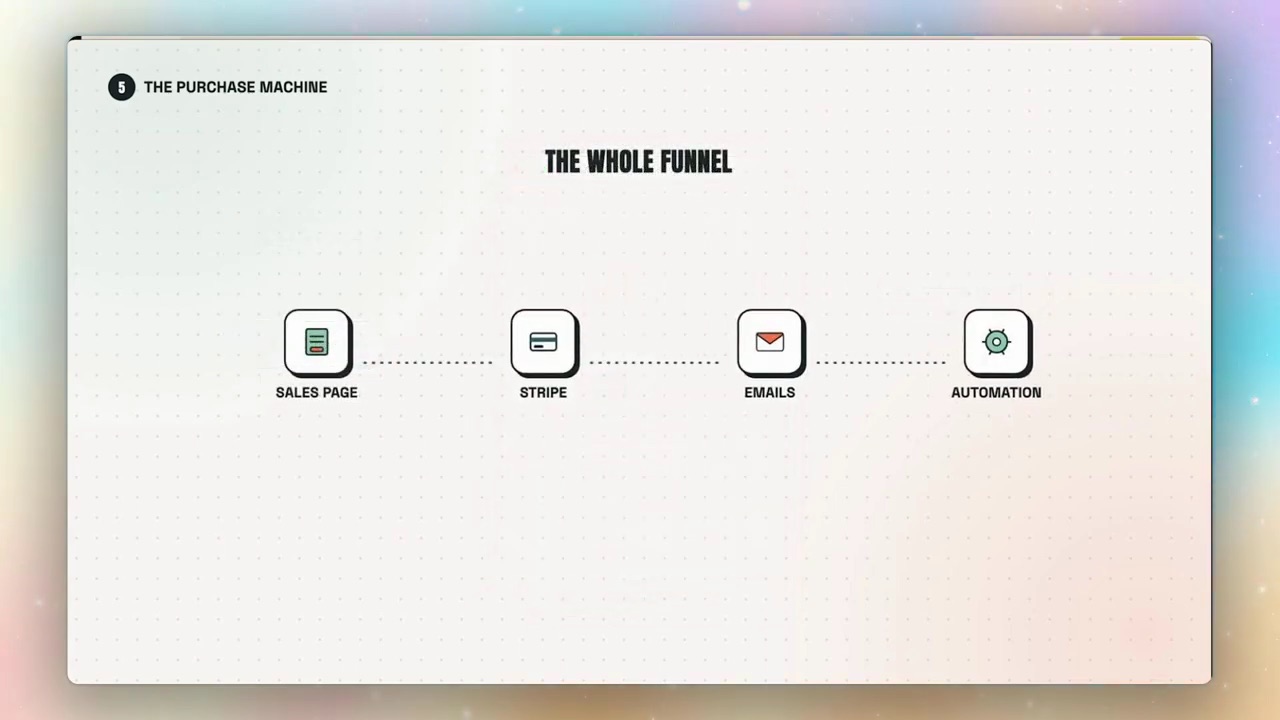
Four pieces, nothing else:
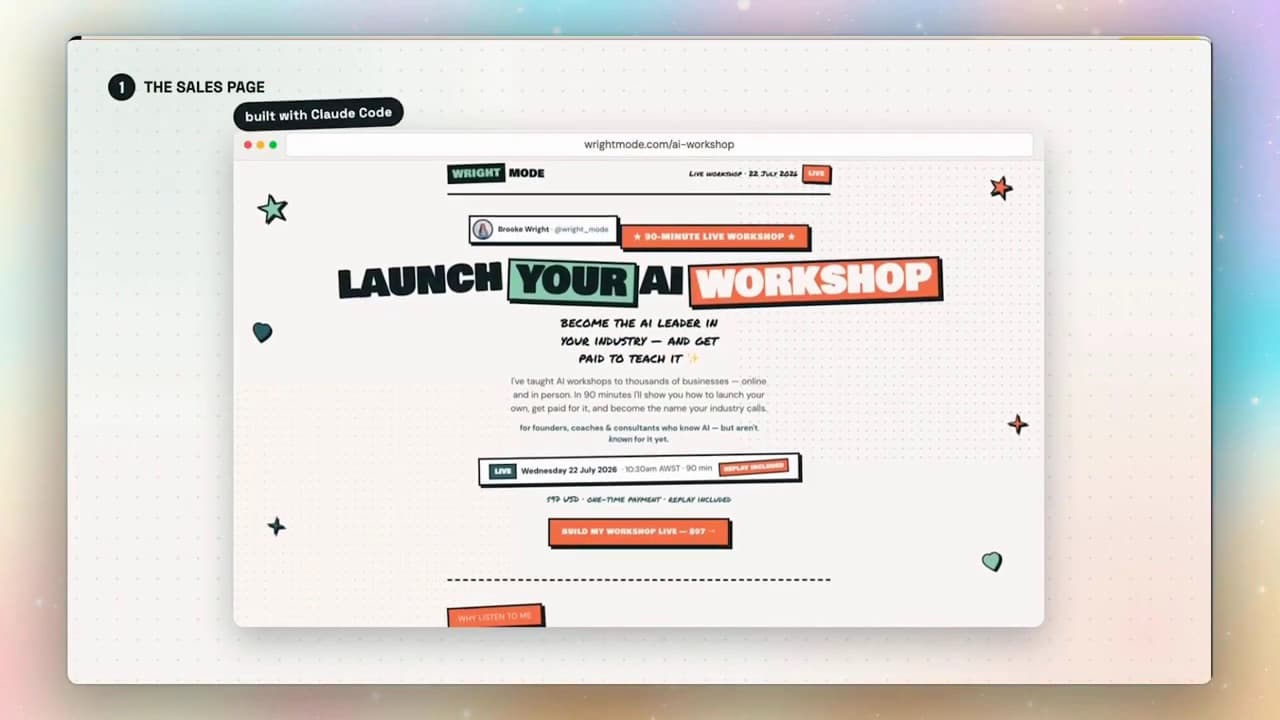
- A sales page — I built mine with Claude Code. Sign-ups land straight on my email list.
- Stripe — one payment link. You don't need a cart platform.
- The email sequence — confirmation, calendar details, replay. All automated.
- Reminders — one the day before, one an hour before, one at "we're live now".
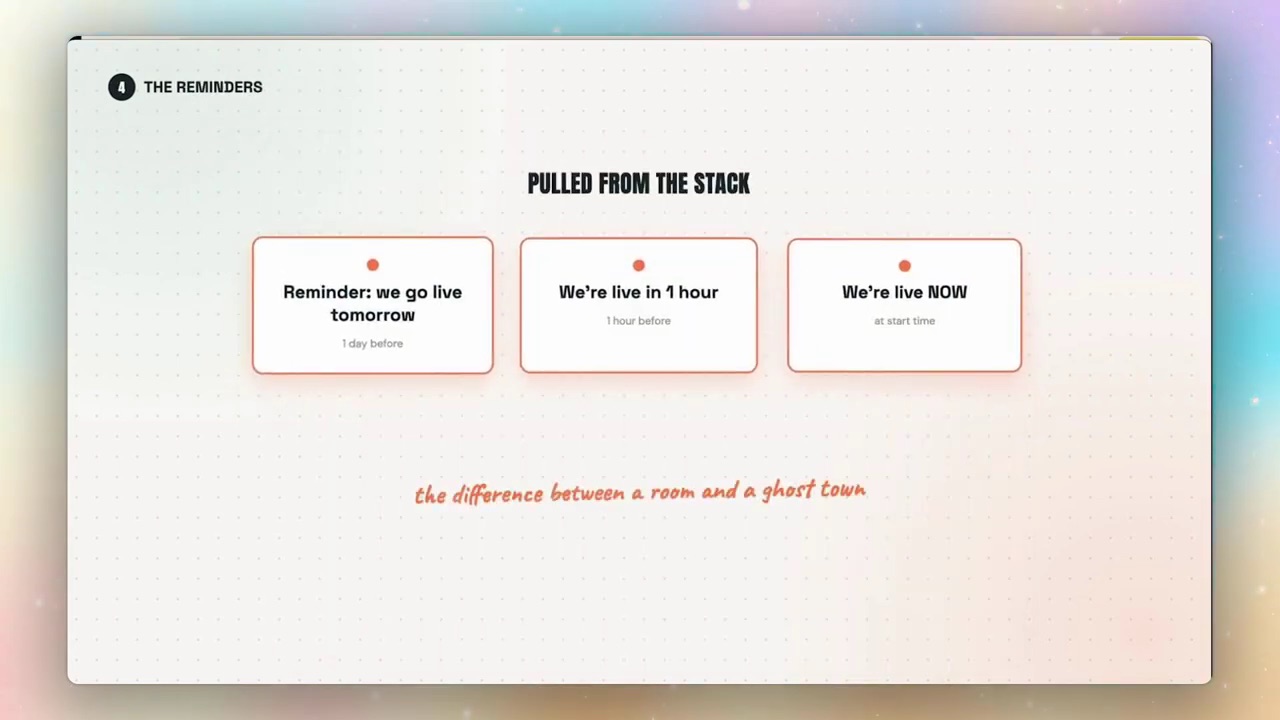
Those reminders are the difference between a room and a ghost town. And while you're wiring it up, segment everyone who registers — tag them as workshop attendees so you can send the replay, follow up later, and know exactly where they came from. Kit or Flodesk both handle this.
The order you build these things in matters more than people think — I broke that down properly in why the order is what makes you money with Claude.
Step 5 — fill the room
First, calibrate: 20 people is a great first room. Mine had two, and it didn't matter — you give the same quality workshop to 2 as you would to 200.
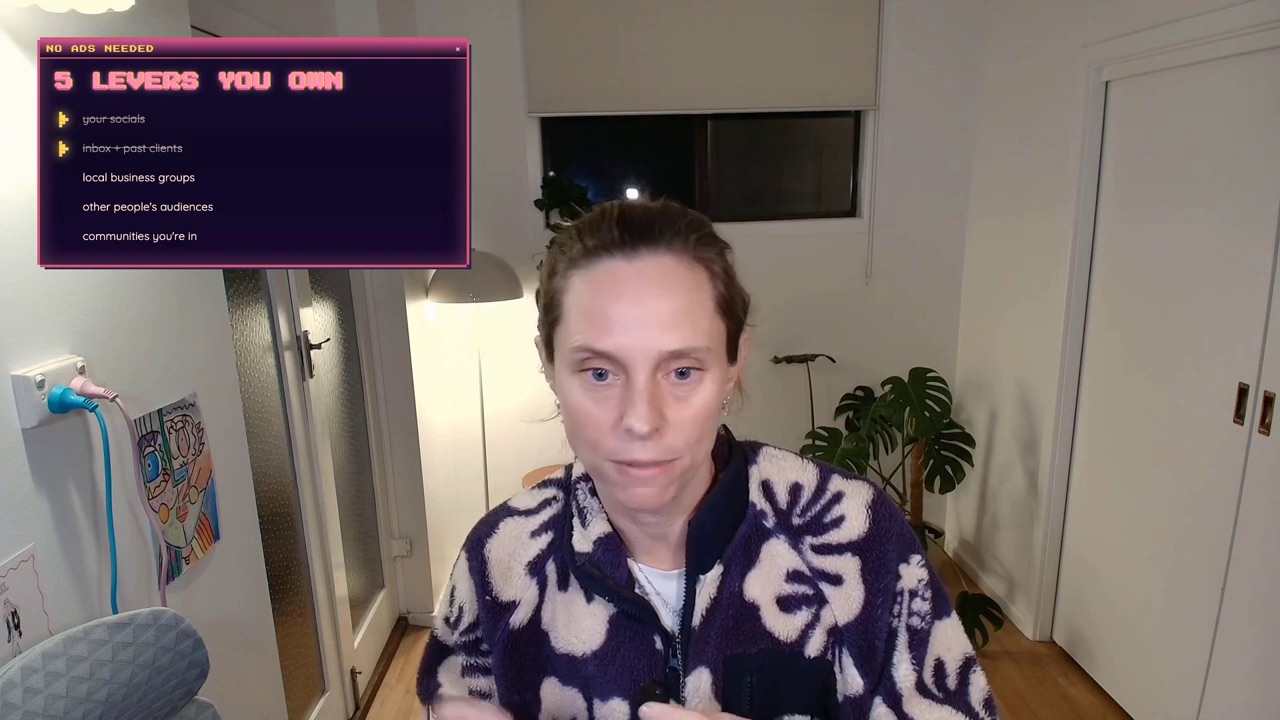
You already own five levers, and none of them are ads (I've never run one):
- Your socials — post the workshop everywhere, repeatedly.
- Your inbox and past clients — the warmest list you have.
- Local business groups — I emailed business chambers with "I've got an intro to AI and automation workshop."
- Other people's audiences — ask your network to share it. Be shameless. It works.
- Communities you're already in — the groups where people already know your name.
The move that outperforms everything: personal DM invites. A quick voice note — "Hey, I have this workshop coming up, I thought of you and reckon it'd be useful" — with their actual name. In the age of AI, being personally invited by a human lands harder than ever.
Step 6 — the close that gets clients
This is the actual answer to "how does a workshop become clients?" — and it happens in the last 10 minutes.
I use a self-identifier close (learned from my business advisor). No urgency, no ick. You name the kinds of people sitting in your room, warmly and honestly, and the right ones identify themselves:
- Bucket one: "AI feels like the devil and you'd like the '90s back." Thank them for coming. Offer to PayPal them a coffee.
- Bucket two: "You came to check you're on the right track — and you are." Ask them to share your work with someone who'd benefit.
- Bucket three: "You want more of this." Invite them to the next step with you.
The rule that makes it work: one clear next step. Never a menu. The moment you offer three things, people choose nothing. For me that next step was a paid 4-hour workshop; for you it might be consulting or a membership. My membership and my $3,000 consults came almost entirely from people who first sat in a workshop room.
Two more things so you don't spiral: on a free room, a 50% show-up rate is normal (often lower). And the people who stay to the end are the warmest audience you will ever pitch — so if you're nervous, do what I did and say up front, "At the end I'll tell you how we can work together — but let's get into it."
The loop: 2 → 20 → 233
The workshop isn't the finish line. It's one turn of a wheel.
While the room is still warm: send the follow-ups — feedback, testimonial ask, replay, the fast-action bonus, how to work with you. One job per email, never all of it at once. Track your sign-ups, show-ups and conversions so every run beats the last one.
Then go again. I ran these every six weeks for a year. That loop IS the business model: 2 people, then 20, then 233 in a single paid workshop.
One promise. Proof content. Priced right. Built in an afternoon. Room filled. Self-identifier close. Repeat in six weeks. That's how clients actually happen.
FAQ
How do you get clients from running a workshop?
Clients come from the last 10 minutes — the close. Use a self-identifier close: name the two or three kinds of people in your room, and invite the "I need more of this" group to one clear next step (a consult, a paid program, a membership). One offer, never a menu — when people are given three options they choose nothing.
Should my first AI workshop be free or paid?
Free, if you don't yet have an email list — free rooms fill fast, grow your list, and give you more goodwill to sell with at the end. Once you have an audience (roughly 10,000 followers or an established list), switch to low ticket: a small price lifts the show-up rate because people protect what they've paid for.
How many people do I need for a workshop to be worth running?
Twenty is a great first room, and even two is worth it. My first workshop had two attendees — both became long-term members and the list kept growing with every run. Early workshops are about reps, confidence and list growth, not room size.
What tools do I need to run an AI workshop?
Four things: a simple sales page, a Stripe payment link, an automated email sequence, and reminder emails (day before, hour before, live now). You can build the whole stack in an afternoon with Claude as your patient tech friend — no funnel software required. If you get stuck turning your session recordings into follow-up assets, stop wasting your AI meeting notes shows you how to squeeze more out of every call.
If you want the whole machine built alongside people doing the same thing — the email scripts, the pitch templates, the close word for word — that's exactly what lives inside the Wright Mode membership. Or, if you'd rather map your entire client-getting stack 1:1 in 90 minutes, book a Wright STACK Consult.