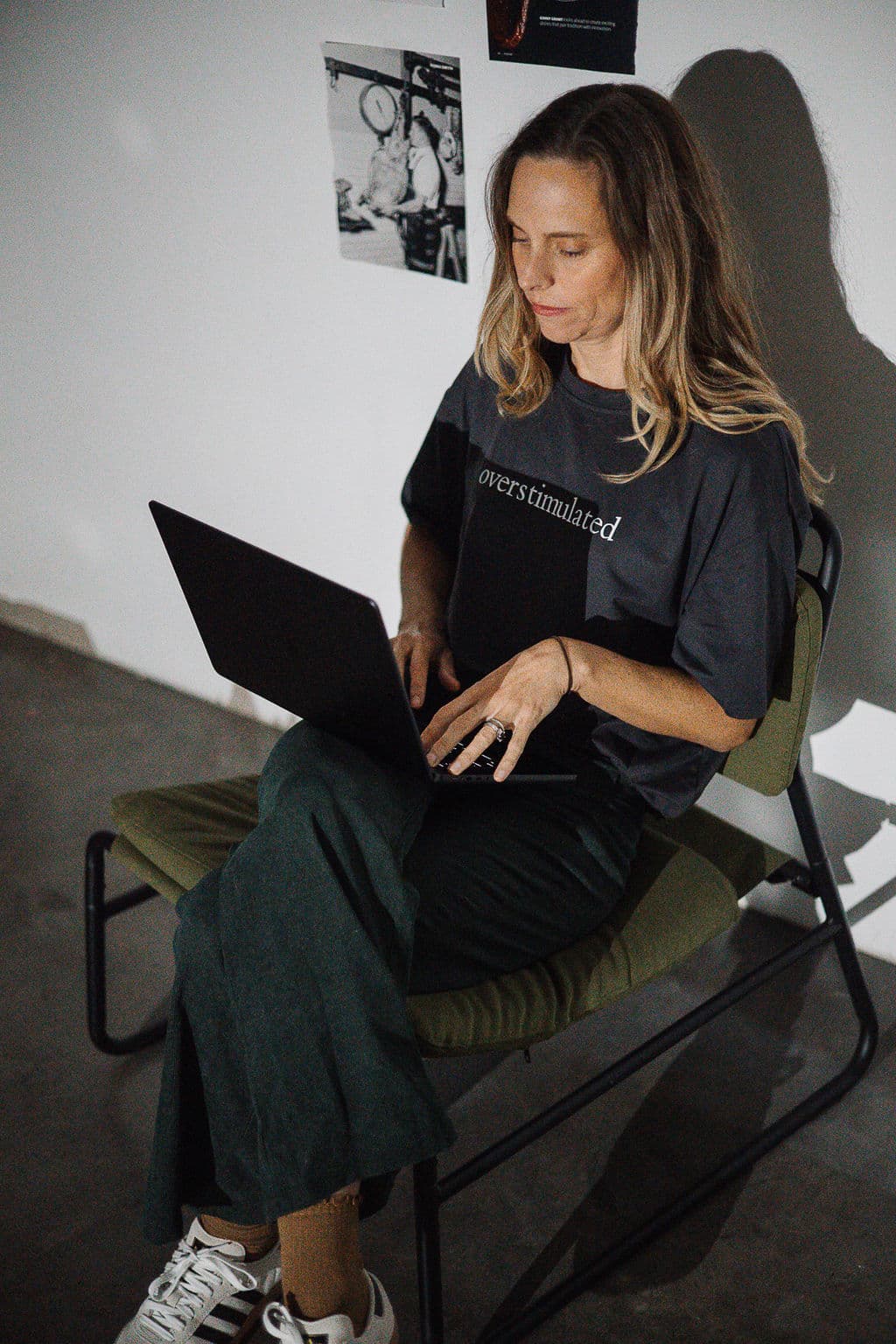
Last Monday, I got up at 6am after our first night with a new puppy (who, for the record, doesn't believe in sleep). My husband made me a coffee. My mum was visiting. I was running on about 11 minutes of actual rest.
And somehow, I still managed to deliver a workshop for Sabrina Ramonov's Women in AI community.
This wasn't a fluke.
It was the second time I'd been invited to speak in that community. And it made me realise something important: I've never actually walked through how I built this.
I'm not a software engineer. I don't have a computer science degree. I'm self-taught, neurodivergent, and absolutely feral about making AI accessible to women in small business. And somehow, that's become my entire business.
So here's the full breakdown of how I went from "I should probably learn this AI thing" to consulting with the WA government, speaking at conferences with Microsoft and HubSpot, and teaching in global communities.
The problem nobody talks about (but everyone feels)
In Australia last year, only 7% of women received AI training compared to 17% of men.
Let that land for a second.
That's not a gap. That's a chasm.
And it's exactly why I'm on a mission to teach 10,000 women how to use AI by 2026.
But here's the thing I kept seeing with my clients and network: people weren't drowning because AI is hard. They were drowning because:
- They were stuck in admin mode. Buried in tasks that AI could handle in seconds.
- They were buying into the hype. Confused about what actually matters vs. what's just noise.
- They didn't have relatable teachers. Most AI education came from technical backgrounds. Most people learning aren't technical.
So I decided to build what I wished existed: AI education that came from lived experience, made sense for small business operations, and didn't require you to suddenly speak fluent Python.
This is why I'm an AI strategist for small business, not just an AI educator. The education only matters if it actually moves the needle in your business.
Building one exceptional workshop instead of many mediocre ones
I didn't start with a complex ecosystem. I started with one free workshop.
The first "Intro to AI and Automation" session had maybe 10 people. Just my network. Nothing fancy.
But here's what I did differently: I obsessed over what people would actually do after they left.
In a 45-minute online workshop, that means two to three tangible things. Anything more and people's brains turn to mush. Nothing less and they walk away feeling like they wasted their time.
Here's the framework I built every workshop around:
- One core problem: what's actually frustrating my audience right now?
- Two to three solutions: strategies they can implement the next day.
- Proof it works: real examples from my own business (or my clients').
- No full sales pitch: trust and credibility come from generosity, not pushy closes.
That first free workshop grew. The recent Lovable workshop had almost 80 people. Sabrina's community had even more. But I didn't build 10 different workshops. I built one exceptional one and adapted it.
Why this matters: when you keep teaching the same workshop, something magical happens.
You get better.
You know the awkward moments.
You know what questions trip people up.
You become genuinely good at presenting it.
Compare January Brooke (nervous, unprepared, overthinking) to December Brooke (confident, sharp, knows exactly what landing looks like). That only happens with repetition.
How free workshops led to paid offers (and government projects)
I talk about this all the time: freely share knowledge, charge for implementation.
The free workshop was never a loss leader in the sketchy sense. It was genuinely useful education. But it did three things:
- Built authority. I wasn't just saying I knew this stuff — I was teaching it live to strangers.
- Filtered for the right people. The ones who showed up? Those were my people. Neurodivergent, small business owner vibes, hungry to learn.
- Created natural funnels. Some people needed more. That's where my AI Dream Team four-hour workshop came in. Others wanted accountability. That's the Wright Mode Membership.
But here's the real leverage move: I started partnering with local business chambers. All of them. Then I spoke at the Busselton AI conference alongside Canva, Microsoft, and HubSpot.
Then global communities noticed.
Then the WA government reached out.
None of that would've happened if I'd started trying to sell instead of teach.
Daniel Priestley calls this "becoming a key person of influence in your niche."
I call it: do genuinely good work publicly, and opportunities find you.
The system I built (and you can steal)
Here's where most educators fail: they create amazing one-off workshops and then move on.
I automated the hell out of this instead.
Every workshop gets repurposed:
- Presentation deck (built in Gamma, btw — it's incredible): use as-is or tweak examples for different audiences.
- Email sequences: automated follow-ups go out to every attendee.
- Social content: the workshop gets turned into 4 carousel posts on Instagram and TikTok through my content system.
- Membership resource: video walkthrough and templates go into the hub.
I use the same workshop for local chambers, online communities, and paid workshops. I'm not recreating the wheel. I'm getting better at presenting it every single time.
This is why consistency beats perfection. Messy action is always better than waiting for the "perfect" version.
Why being neurodivergent matters (in my teaching)
I teach about this openly because it's fundamentally who I am and how I see AI.
AI makes sense to my neurodivergent brain because:
- It handles repetitive cognitive load (which obliterates executive function).
- It doesn't judge me for needing things clearly explained three different ways.
- It lets me prototype ideas fast without perfectionism getting in the way.
When I teach, I bring that perspective. I talk about admin drowning. I talk about context switching. I talk about how to use ChatGPT as your inbuilt IT department, not just a glorified search engine.
And the people who connect with that? They become my people. They work with me. They refer others. They trust me.
You don't build a real business trying to appeal to everyone. You build one by being unapologetically yourself and letting the right people find you.
The membership was born from a gap I saw
Free workshops teach foundation. Paid workshops go deeper. But what people really needed was sustained implementation with accountability.
So I built the membership. Two co-work sessions a month, plus a monthly Build w/ Brooke. Video walkthroughs of automations I've actually built. Templates you can steal. A Slack community where people aren't just learning — they're doing.
This is where the real magic happens.
Because knowledge without implementation is just expensive entertainment.
What you can actually steal from this
Whether you're in AI, copywriting, design, or anything else:
- Build one workshop, not many. Pick your core offering. Make it exceptional. Repeat it obsessively.
- Teach from lived experience. Not theory. Not what you read. What you've actually done and what actually worked.
- Be relatable, not polished. I talk about chaos. About puppy sleep deprivation. About neurodivergence. People connect with that. They don't connect with perfection.
- Start free, then funnel to paid. Trust beats sales pitch every single time. Build goodwill. People come back. Some of them become clients.
- Systemise everything. Don't rebuild. Repurpose. Use tools like Gamma to create on-brand decks in minutes. Set up email automations. Let your content work in multiple places.
- There's plenty of pie. The AI education space isn't crowded. Neither is yours. Stop gatekeeping. Share generously. The right people will become your people.
Here's what I'm actually proud of
I put in the work this year. I showed up imperfectly.
I taught when life looked like an episode of Bluey directed by Quentin Tarantino (which, accurately, is where we are right now).
And somewhere along the way, I became one of the best AI educators in Australia. Probably globally. (You tell me if I'm right.)
But more than that? I'm closing a gap. I'm teaching women who didn't have access to this knowledge. I'm building confidence in people who thought AI was only for technical people.
That's the entire point.
If you're thinking about building something like this — whether it's AI workshops or anything else — go for it. There's plenty of room. Just make sure you're solving a real problem and doing genuinely good work.
If you want to go deeper into this stuff, the AI Dream Team workshop drops in February. If you're already using AI daily and want ongoing support, co-working sessions, and done-for-you templates, the Membership is where the real community is.
Either way? You've got this. Even with a puppy that doesn't sleep.
FAQs
Do I need a technical background to learn AI?
Absolutely not. I'm self-taught and non-technical. The best AI educators are often the ones who struggled with it first, because we know how to explain it in real-world terms. If you can think strategically about your business, you can learn AI.
How do I start building my own AI education offering?
Start with one free workshop solving one real problem for your audience. Don't overthink it. Get 10 people in a room (or Zoom). Teach something genuinely useful. Iterate based on feedback. Repeat it until you're confident. Then build paid offers for people who want deeper support.
Why is repurposing the same workshop better than creating new ones?
Because mastery comes from repetition, not variety. When you teach the same workshop multiple times, you get better. You know the tricky parts. You become genuinely skilled at delivering it. Plus, it's more sustainable and lets you actually help people instead of endlessly creating content.
What should I include in a 45-minute workshop?
Two to three tangible takeaways maximum. Anything more overwhelms people's brains. Focus on one core problem your audience has right now, and give them real strategies they can implement the next day. Avoid hard sells — trust and credibility come from generosity.
How do you turn free workshops into paid offers?
Free workshops build trust and filter for the right people. Some attendees will naturally want deeper support — that's where your paid offers live. Offer a clear funnel: free workshop → paid workshop for depth → membership for sustained implementation and accountability. Don't hard-sell; just make the next step obvious.